Historical Context
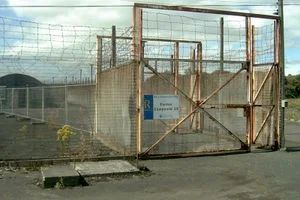
Established in 1971 on the grounds of a former Royal Air Force base, Long Kesh Prison, infamously known as the Maze, vividly encapsulates the tumultuous history of the Troubles in Northern Ireland. Originally built to accommodate the increased number of political prisoners during the conflict, the prison's design featured high-security walls and a series of isolation blocks, emphasizing its intended purpose as a site for controlling and containing dissent. Given its origins, it became a physical representation of the bitter divisions that marked Northern Ireland during this era.
The Troubles, which spanned nearly three decades, were characterized by violent clashes between those advocating for Northern Ireland's union with Great Britain and those advocating for a united Ireland. Long Kesh became a microcosm of these larger societal conflicts. The prison's existence was not merely about incarceration; it was about ideology, identity, and the struggle for political recognition. What that means in a broader sense is the evolution of the prison reflected shifting political sentiments, from violent resistance to eventual negotiations aimed at peace.
Significant Events
Housing both republican and loyalist paramilitary inmates, the Maze became notorious for events that would reverberate through Irish and British history. The Blanket Protest and the 1981 Hunger Strike, led by Bobby Sands—whose image has become iconic in Belfast—highlight the prison’s role as a flashpoint for political discontent. The protests underscored the inmates' demand for political prisoner status rather than being treated as common criminals. This distinction was central to their identity, representing a broader struggle for recognition. Sands' death from hunger strike drew international attention and brought the imperatives of the Irish nationalist cause to the forefront.
The remarkable 1983 escape of 38 Irish Republican Army members marked the largest prison break in the British Isles, further entwining the prison's legacy with the conflict. This event not only embarrassed the British government but also galvanized support for the IRA, showcasing the inadequacies of state control over such volatile elements. Each of these incidents played into a narrative that deepened the divisions within Northern Irish society, challenging public perceptions and promoting a cycle of violence and political unrest.
Here's the thing: these events are not merely historical footnotes; they shaped public consciousness and influenced the political landscape for generations. The Maze Prison became more than a penal institution; it was a symbol of resistance that transcended its physical confines. It transformed many into martyrs for the nationalist cause and established a skewed yet prophetic mythology around imprisonment and sacrifice.
Preservation and Reflection
Most of the prison complex was demolished in the 2000s, yet some structures, like the Grade A-listed H-Block 5 and the prison hospital, have been preserved due to their historical significance. The decision to maintain certain elements of the labyrinthine prison serves as a reminder of the complexities surrounding the legacy of the Troubles. These preserved areas invite scrutiny and reflection, provoking discussion among visitors about both the horrors and the history of that period.
Although the site isn't a typical tourist destination, it draws visitors interested in dark tourism and the legacy of the Troubles, who pause to reflect on its profound historical importance. These visitors often approach the site with a mix of curiosity and reverence, attempting to understand a past marked by violence and divisive ideologies. It’s fascinating but also somewhat troubling; how do we reconcile such a significant part of history with the modern world?
Long Kesh, whether viewed as a site of sorrow, resistance, or political upheaval, stands as a significant marker in Northern Ireland's narrative. Its preservation invites conversations about memory, reconciliation, and the ongoing impact of its past. It raises questions about what stories we choose to keep alive and how they shape our national identity.
Implications and Future Outlook
The legacy of Long Kesh continues to echo in Northern Irish society and beyond. As the region grapples with its turbulent history, the prison serves as a reminder of the various forms of political struggle, and the far-reaching consequences of state oppression. If you're working in this space, understanding the societal dynamics and historical context is crucial for fostering dialogue on reconciliation.
As Northern Ireland moves further away from the conflict—approaching a period defined by relative peace—it faces the challenge of how to memorialize its past while ensuring the future is less burdened by division. This reconciliation process extends beyond simple acknowledgment; it requires a deep engagement with the stories of those who suffered, those who resisted, and those who continue to live with the repercussions of the Troubles.
The impending challenge for historians, politicians, and citizens alike is how to integrate this complex past into a unified narrative. Simply erasing the darker chapters won’t mend the fractures in society. The significance of historical sites like Long Kesh goes beyond preserving bricks and mortar; they embody the struggles for identity and justice that are far from over.