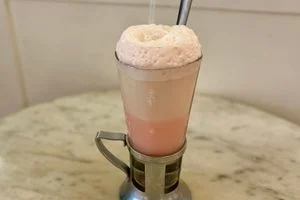
Cincinnati's beverage scene is often dominated by breweries, yet the city boasts a historical effervescence of its own: the nectar soda. With roots tracing back to the late 19th century, this drink has a unique flavor profile that merges vanilla with a hint of bitter almond, resulting in its signature pastel pink hue, reminiscent of almond blossoms. According to local food historian Dann Woellert, the drink has affectionately earned the title "drink of the gods." This distinction isn’t mere embellishment; it reflects a deep cultural heritage tied to Cincinnati's identity.
A Sweet History
The genesis of nectar soda in Cincinnati appears to originate around the 1870s. While various anecdotes abound regarding its creation, many attribute the establishment of this distinct flavor to pharmacist John Mullane. After a trip to Quebec, he began selling it at his downtown confectionery. Mullane's innovation marked the meeting point of pharmacy and pleasure, where soda became more than a medicinal tonic. Interestingly, New Orleans also adopted the nectar soda but saw the tradition fade away by the mid-20th century. Woellert insists that Cincinnati's version predates New Orleans by nearly a decade, solidifying its place in the city's beverage lore. This difference in progression between the two cities suggests that local cultures can nurture unique variations of similar ideas, a point that bears significant implications for regional identity.
Legacy of the Beverage
Nectar sodas thrived at soda fountains and candy shops across Cincinnati in the early 1900s, though their prevalence has diminished over the years. These locations were more than just shops; they served as social hubs, where communities gathered to enjoy sweet drinks and share stories. However, they remain a specialty at certain local establishments. The Aglamesis Brothers ice cream shop, in operation since 1908, still features nectar sodas on their menu, carrying forward the legacy through generations. Randy Young, the current president and CEO, highlights not just the flavor but the heritage that comes with each sip, indicating the drink's role in preserving community identity.
Graeter's, another celebrated ice cream chain established in 1870, contributes to the nectar soda tradition in its own way. While the specifics of when they introduced it are unclear, chief of retail operations Chip Graeter recalls its peak popularity during the 1940s through the 1960s. This time period highlights how lifestyle trends can influence beverage consumption; it’s a window into a simpler time in American history. A historical ad showcased at Dow Drug Store, which had 32 soda fountains in the area, reveals just how integral nectar sodas were to Cincinnati’s social fabric. It's almost shocking to realize how far such drinks have slipped off the mainstream radar.
Crafting the Perfect Nectar
The original recipe for nectar syrup called for a mix of half-and-half or milk combined with water, bitter almond extract, vanilla, and food coloring. This combination created a texture and taste that many remember fondly. But as consumer preferences shifted towards dairy-free options, Aglamesis adapted its method, leading to a dairy-free syrup for modern consumption, while Graeter's has stayed true to its traditional milk-based recipe. This divergence raises questions about authenticity and adaptation in food traditions. Both shops craft the soda by mixing the syrup with whipped cream and vanilla ice cream, topped off with soda water and additional whipped cream. The end result is not just a drink but a nostalgic experience that transports customers to another era.
A Modern Cult Following
Despite a decline in popularity, older adults continue to savor nectar sodas, while younger generations are discovering this local delicacy. “Those who enjoyed them in their youth still cherish them today,” Graeter mentions, echoing a sentiment that reaches beyond mere taste. For many, drinking nectar soda is like revisiting a cherished memory, blurring the lines between flavor and nostalgia. However, milkshakes and smoothies have since captured a larger market share among today's consumers, showing how competition has evolved in the beverage market.
Interestingly, the legacy of nectar soda may have influenced modern commercial sodas. Young notes that brands like Barq's have created their own variations of cream soda, evoking the flavors of nectar soda. This crossover indicates a form of cultural survival; traditional flavors can find new life through commercial adaptations. (And this is the part most people overlook) You can see how regional specialties can impact larger beverage trends, suggesting that what we may consider niche could actually have a broader influence in unexpected ways.
Looking Ahead
Cincinnati's nectar soda brings with it a rich tapestry of history, flavor, and community ties. As contemporary trends become increasingly health-conscious, will nectar soda evolve further? If you're working in this space, you might ponder how traditional beverages can adapt to meet modern demands without losing their essence. The unmistakable connection between memory and flavor could help revitalize interest in this classic drink. New marketing strategies, perhaps aimed at younger audiences who seek unique beverage experiences, could help reintroduce nectar soda to the masses. Such potential isn’t just about rekindling nostalgia; it's about keeping a piece of Cincinnati’s history alive for future generations to enjoy.