A fresh wave of hostilities in the Middle East has once again led to the closure of the Strait of Hormuz, significantly affecting global oil prices. As the US and Iran engage in military exchanges, market observers are witnessing a marked increase in oil, with Brent Crude peaking at $87.20 this Tuesday, a level not seen in a month. This current spike pales in comparison to the $110-120 range typically observed earlier in the conflict.
However, the stock markets have reacted with surprising resilience. While oil prices are on the rise, stocks have shown minimal movement, provoking speculation among investors. Some are considering the possibility of a “bait-and-switch” play from US President Donald Trump, who has frequently contradicted his statements post-announcement, leading to tempered expectations regarding the geopolitical situation.
“Market reactions to the renewed US-Iran confrontation have been muted thus far,” notes Danni Hewson, head of financial analysis at AJ Bell. “Oil prices are creeping up, yet they remain significantly below their high points from earlier this year.” Investors seem to believe that the escalation is merely a short-term tactic by the US, with a broader outcome aimed at achieving stability before the critical mid-term elections in the US.
Currently, the FTSE 100 index dipped merely 0.2% this Tuesday and is down 1.8% over the past week, yet it maintains a healthier position compared to earlier months. The S&P 500 remains flat week over week but is nearly 8% higher than mid-April, with the tech-oriented Nasdaq expected to open more than 0.5% up later in the day.
Shifting Investor Mindsets
The repeated cycle of stock fluctuations tied to uncertain global events may be inducing fatigue among investors. The barrage of political turmoil, tariffs, and conflicting international affairs has taken its toll over the past year. This relentless pressure has caused many to adopt a “wait and see” approach, hesitant to adjust positions continually amid a sea of uncertainty.
“Investors feel like they’re replaying an unfavorable movie,” remarks Dan Coatsworth, head of markets at AJ Bell. “The renewed tensions limiting shipping access through the Strait of Hormuz are reminiscent of past crises.” That said, many investors are exhibiting a cautious calm, holding onto hope for a diplomatic resolution in the Middle East.
The UK stock market has maintained its ground better than many European counterparts, largely due to its significant exposure to energy companies like BP and Shell. Yet, sectors like travel, retail, and housing have experienced setbacks as the implications of rising inflation and interest rates weigh heavily on investors’ minds.
External Market Influences
Outside the tensions in the Middle East, other forces are also shaping stock market trajectories. Anticipations surrounding changes in interest rates are influencing stock valuations, especially with the US inflation report looming this week. This report could signal shifts in market dynamics.
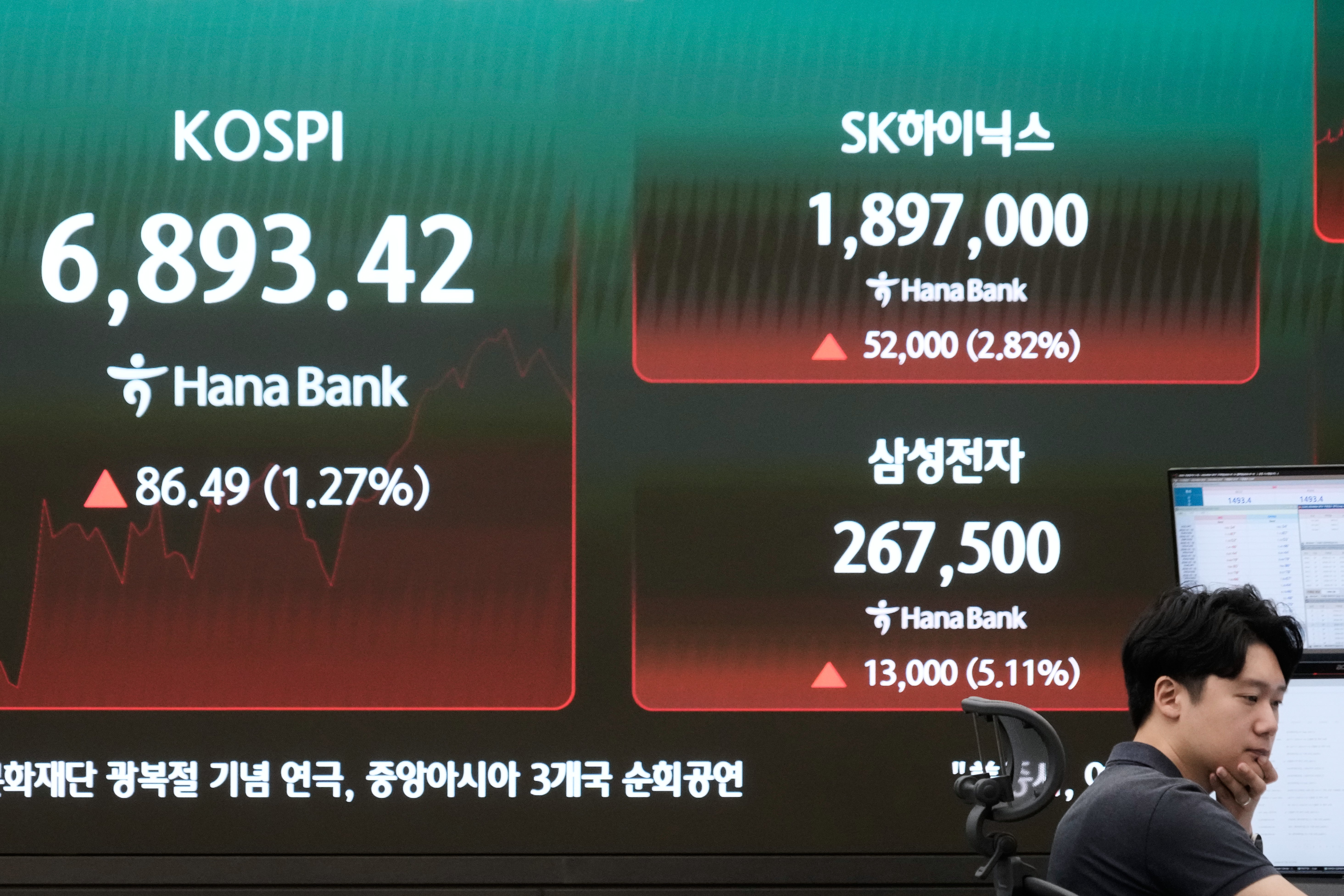
Specific sentiments towards sectors are also pivotal. Recent gains in semiconductor stocks, such as SK Hynix, which rebounded by 3% after a steep drop, indicate that individual segments can fluctuate independently of broader trends.
In highlighting the duality of market reactions, Kathleen Brooks, research director at XTB, notes that both the Korean Kospi and Japanese Nikkei indices showed gains despite overall volatility. This suggests a potential decoupling between energy prices and tech stocks, with circuits pointing to possible resilience in the tech sector despite oil price fluctuations.
In summary, multiple factors are at play, often leading to divergent market movements regardless of prevailing headlines. Should the situation in the Middle East escalate, fears of inflation and increased energy costs will likely send the stock markets downward once again. Yet how severe and how enduring such impacts will be remains uncertain, leaving investors gauging their next moves carefully.