Scientists have created an artificial cell known as SpudCell, exhibiting lifelike characteristics, including the ability to consume, grow, and replicate. According to research released on July 2 to the preprint platform bioRxiv, this breakthrough in synthetic biology could create pathways towards building living cells entirely from scratch, though the work is still awaiting peer review.
Dr. Kate Adamala, a synthetic biologist at the University of Minnesota and a co-author of the study, emphasizes that while SpudCell mimics life, it should not be considered truly alive. Instead, she sees it as an engineering framework capable of producing vital chemicals for civilization, from medicines to plastics. The vision is to pave the way for a biological manufacturing system reducing reliance on fossil fuels.
Despite sparking interest, the research has drawn critique, with some scientists suggesting the timing coincides with the launch of Adamala's nonprofit Biotic, which aims to fund further development of the SpudCell concept. Adamala embraces this scrutiny, asserting that increased attention and funding are necessary for addressing climate challenges. "I feel this incredible stressful urgency that if we don't get to work on it now, then we’re going to run out of time," she stated, outlining bioengineering's potential in climate crisis mitigation.
Understanding SpudCell's Mechanism
The construction of SpudCell is noteworthy; it incorporates 36 purified enzymes and a simplified fatty membrane with a genome roughly 50 times smaller than that of average bacteria. This combination allows the synthetic structure to execute basic cellular functions, marking a milestone achievement in creating a "cell cycle" in vitro.
As Adamala stated, "We built a cell-like system that is fully chemically defined, so there are no unknown building blocks in it." Dubbed "SpudCell" due to its potato-like appearance and a nod to the Sputnik satellite, this research represents a significant advancement in mimicking cell division. Prior attempts, such as those from the J. Craig Venter Institute, aimed to create minimal cells, but SpudCell is the first to successfully demonstrate growth and division through a bottom-up approach.
It’s worth recognizing that, while SpudCell shows promise, it has limitations. The synthetic cells cannot independently produce energy like natural cells with mitochondria. Rather, they require external provisions of lipids, sugars, and enzymes, thus depending on outside input for their operation.
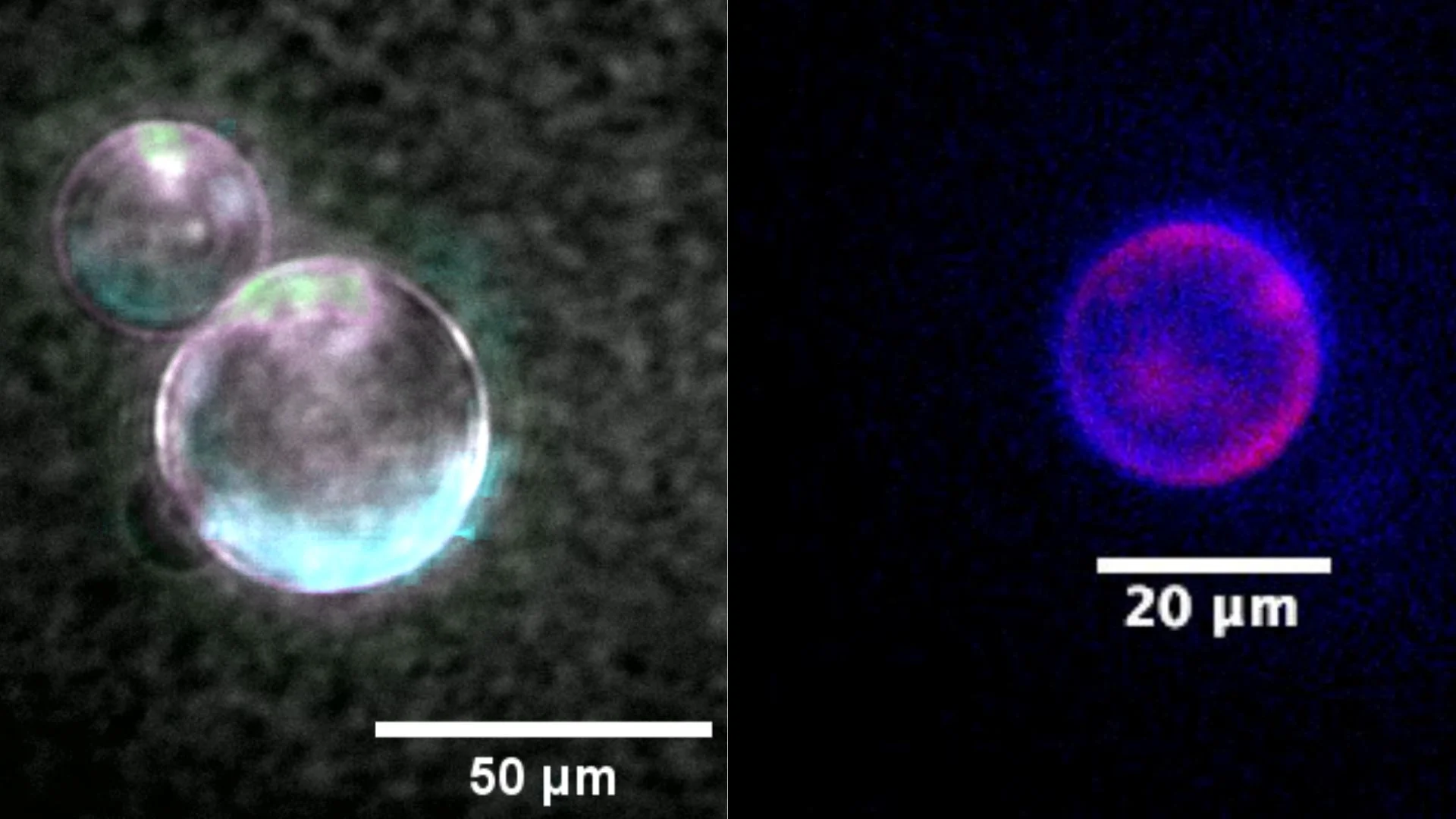
Additionally, SpudCell's genome is structured as plasmids rather than organized in chromosomes, which could complicate the division process since it lacks the cellular skeleton aiding in accurate DNA distribution during cell division. Biophysicist Cees Dekker raised concerns about the research’s findings and the need for peer review, cautioning against premature media attention should the results prove flawed.
Potential Applications and Future Prospects
Adamala envisions SpudCell as an adaptable platform for engineering applications. While traditional cells are commonly used in producing pharmaceuticals like insulin, they inherently resist manufacturing potentially harmful substances. A SpudCell could circumvent these evolutionary constraints, facilitating the production of complex molecules directly.
Furthermore, there’s potential for SpudCell to manufacture next-gen medicines, including mRNA-based therapies and peptide drugs, which require stability modifications in their molecular components. Adamala posits that SpudCell could synthesize these modified building blocks, possibly expediting the development process and reducing associated costs.
Beyond pharmaceuticals, the researchers foresee SpudCell functioning as mobile laboratories that can be shipped dry, activated on-site, and employed securely to synthesize essential chemicals, vaccines, or proteins. Nevertheless, substantial challenges remain before transitioning SpudCell from proof of concept to a fully functioning industrial platform.
Adamala acknowledges the road ahead is long, stating, "[SpudCell] is not an engineering platform that can give you any useful product, but it's step one." The vision of replacing petrochemical processes with biological solutions may still be decades away, yet the work lays foundational groundwork for future advancements. Through her nonprofit, Biotic, Adamala aims to secure funding to ensure continued research in this promising area.
Though the technology exhibits immense potential, experts like Rinaldi emphasize the necessity of rigorous peer evaluation, predicting more sober assessments of the research's viability in the years to come.