New Insights on Early Christian Burial Practices
New research on burial practices in early Christian Sweden has cast doubt on long-held assumptions regarding familial connections among the deceased. Analyzing DNA from 142 skeletons across three cemeteries dating back to the 10th to 14th centuries, a team of archaeologists discovered that many instances of collective burials, where adults and children share graves, rarely indicated close kinship. This challenges not only our understanding of familial bonds in historical societies but also how communal identities formed around shared rituals and spaces.
Surprising Findings from DNA Analysis
Study lead Maja Krzewińska, a paleogeneticist from Stockholm University, expressed surprise at the findings. "We often assume that adults and children buried together are close family members, but our analysis shows that's not usually the case,” she stated. This revelation prompts a reevaluation of what we consider familial relationships. Rather than clustering around biological ties, many co-burials included adults paired with children of the same sex—such as women with girls or men with boys—yet their DNA did not indicate familial relations. If you're working in this space, it’s a vital reminder to question assumptions based on burial practices alone.
Shifts in Burial Customs
As Christianity spread through Scandinavia in the late 10th century, burial customs began to standardize. Graves were typically oriented east to west, with individuals wrapped in simple shrouds and without grave goods. Notably, baptized individuals were permitted interment in consecrated grounds, while unbaptized infants were often excluded. This distinction illustrates a significant shift in how communities viewed life and death. The religious framework influenced practices, yet this does not fully account for the varied reasons behind burial choices.
Krzewińska noted previous analysis of a burial that contained an adult alongside the remains of a fetus—indicating a child not yet baptized. This leads to speculation regarding burial practices surrounding unbaptized children, who may have been placed alongside adults in an effort to bypass religious restrictions. Others may simply reflect a more pragmatic approach during seasonal changes; for example, groups may have buried unrelated individuals together due to ground conditions. Changing environmental factors could have forced communities to adapt their burial practices out of necessity, which means our interpretations of these practices must account for social and environmental pressures.
Complex Kinship Structures
Genetic analysis revealed that some co-burials might relate to extended family or non-biological kinship networks. In early medieval Scandinavian society, households often included people beyond immediate family, such as servants and employees. This complicates our understanding of social structures, where community identity might have influenced burial choices as much as biological lineage. Here’s the thing: social cohesion might have been seen as more important than strict definitions of blood relations.
Kinship Clarified
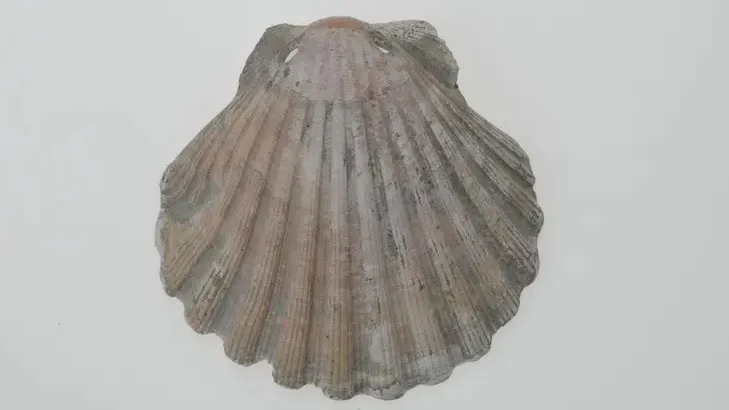
While much of the study focused on unrelated individuals interred together, researchers also uncovered evidence of family burials across generations within the same cemetery. One significant find was known as Lady 56, a Christian pilgrim aged around 30 at her death, who served as a linchpin for three generations of her kin. She was buried with a rare scallop shell, a symbol tied to pilgrimage to Santiago de Compostela in Spain. The presence of such a rare item signals the importance of pilgrimage and how esteemed these journeys were in connecting individuals both spiritually and socially.
Krzewińska highlighted the importance of Lady 56’s family ties, which span generations in the Västerhus cemetery. Her immediate family members, including her daughters, parents, and brother, were buried in various locations within the same cemetery, showcasing a familial pattern contrasted by the unrelated collective burials. The juxtaposition of these burial practices offers critical insights into how communities might have perceived mortality and lineage, further emphasizing the complexity of social dynamics during this era.
Implications and Significance
The Västerhus cemetery, part of a wealthy landowner's estate throughout the 11th to 14th centuries, contained burials from both related and unrelated groups. The genetic connections observed among the primary family line and other kin groups affirm the importance of familial status within burial practices, suggesting that different communities maintained distinct traditions despite their geographical proximity. This differentiation in burial practices might imply a larger network of social connections, with kinship not merely defined by blood but by shared societal roles.
This research provides a fresh lens through which to view medieval burial customs, emphasizing the value of ancient DNA analysis in understanding past social structures. The findings reveal how deeply entangled individual and communal identities were during this period. Social norms were likely influenced by a mix of religious beliefs and practical considerations shaped by environmental realities.
As methodologies evolve, they afford us new insights into the complex interplay of kinship and community identity in historical contexts. What this means for you, whether you're a historian, an archaeologist, or simply curious, is that our understanding of ancient societies is continually challenged and refined. The past isn't just a series of isolated events, but an intricate web of relationships that shaped human experience.