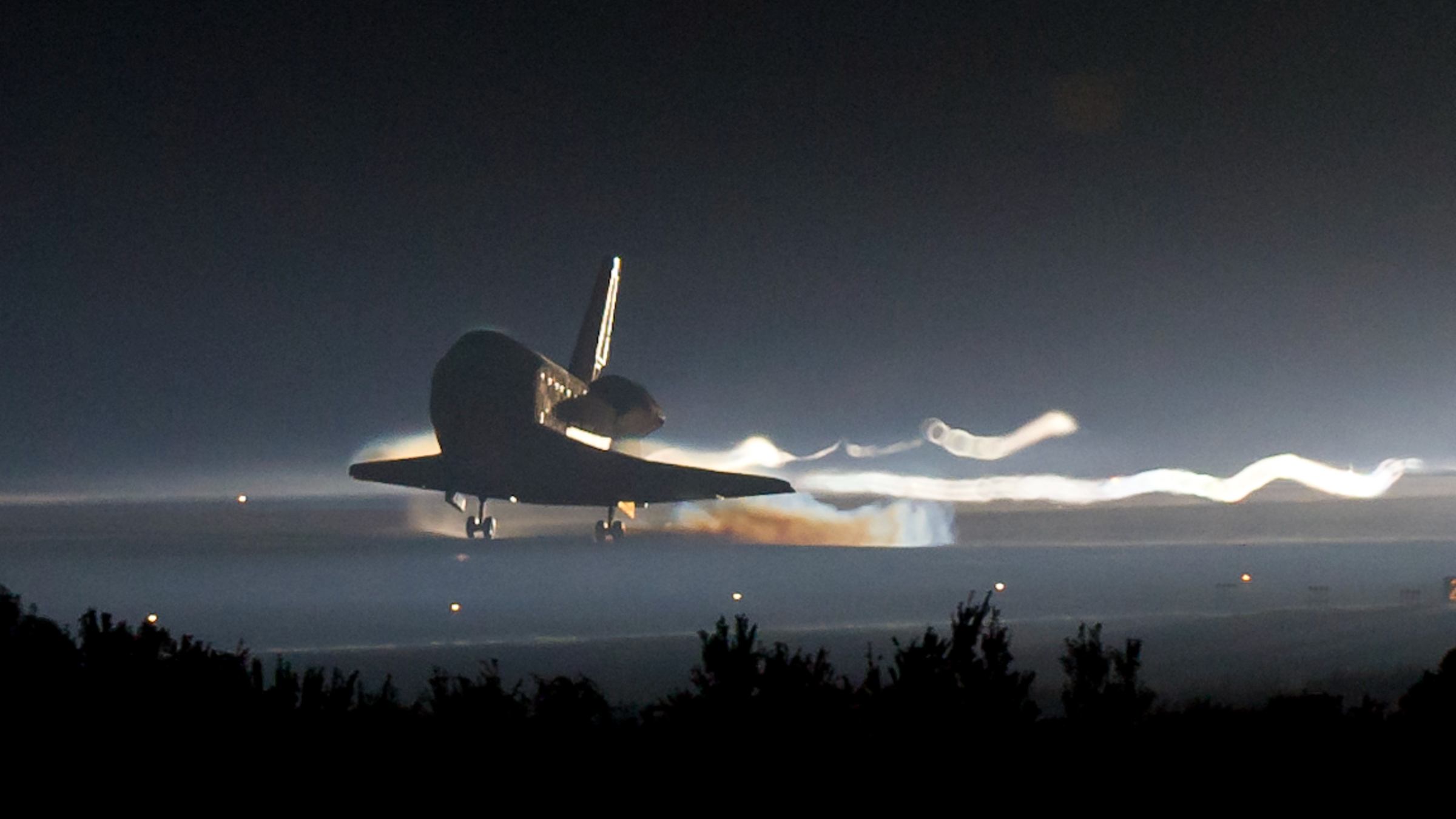
This remarkable photograph captures the final moments of NASA's Atlantis as it approached the International Space Station (ISS) on July 10, 2011. This moment not only represented Atlantis' journey but also served as a significant milestone in the 30-year history of the Space Shuttle program. The closeness of this historic spacecraft to the ISS exemplified decades of hard work, risk, and triumph in pushing the boundaries of human exploration beyond our planet.
The Space Shuttle Program operated from 1981 to 2011 and featured five notable orbiters: Columbia, Challenger, Discovery, Atlantis, and Endeavour. Collectively, these spacecraft completed 135 missions, accruing over 32,000 hours in space. The shuttles played critical roles in constructing the ISS and transporting astronauts while also contributing to the deployment and servicing of key scientific instruments like the Hubble Space Telescope and other vital missions that expanded our understanding of the cosmos. This program was pivotal in linking various international efforts in space, enhancing collaboration between nations often at odds on Earth.
Highlights of Atlantis and Its Final Journey
Atlantis, which flew a total of 33 missions—the second highest after Discovery—made its final flight on July 8, 2011. This mission concluded with a successful landing at the Kennedy Space Center on July 21, where the shuttle is now part of a dedicated exhibit, allowing visitors to witness not just the shuttle itself, but a piece of space history that symbolizes the aspirations and challenges of human spaceflight. While many may view this exhibit as just another display, what it represents is a continuum of achievement and loss, innovation and setback, indelibly tied to the story of humanity’s quest for knowledge.
The stunning image taken from the ISS showcases Atlantis flying over the vibrant turquoise waters of the Bahamas. The shuttle's bay doors are open, a standard protocol during low Earth orbit to keep the radiators cool and facilitate docking with the ISS. This operational detail highlights the intricate engineering behind the shuttle's design. Such procedures were implicit in the complexity of missions that often lasted days, and they underscore the remarkable precision needed for successful operations in space.
This operation was essential as it allowed the shuttle's docking mechanism to establish a secure connection with the ISS, enabling astronauts to transfer between the two vessels. The photo serves as a lasting reminder of the shuttle's final docking procedure—capturing a moment where human ingenuity connected two enormous technological achievements orbiting together in the void. This deep connection between space exploration and our planet reflects both our ingenuity and our humanity, emphasizing that for all its technical prowess, space travel is still about people and their dreams.
Significant Achievements of the Space Shuttle Program
The Space Shuttle Program's legacy is defined by its extensive contributions to space exploration. Its missions included visits to the Russian Mir space station and servicing the Hubble Space Telescope, along with sending the Magellan spacecraft to Venus and the Galileo probe to Jupiter. In total, the shuttle orbited Earth 4,848 times, covering nearly 126 million miles—over 525 times the distance to the Moon. Such milestones didn’t occur in a vacuum; they reflected years of painstaking research, engineering, and international collaboration that transformed our understanding of space and science.
NASA officials remarked in 2011 that photos of the shuttle framed unique views of Earth, providing a perspective that resonates emotionally with people. Atlantis' legacy is not just one of technological advancement but also a poignant human connection to our planet. Each photograph taken from the shuttle serves as a visual story, one that sparks imaginations and encourages new generations to consider careers in science and technology.
The Shuttle Program, while celebrated for its accomplishments, was not without tragedy—most notably, the Challenger and Columbia disasters, which resulted in the loss of all crew members on board. These tragedies remind us of the risks involved in pushing technological boundaries. Ultimately, NASA retired the program in 2011 due to rising operational costs and the completion of ISS assembly, leaving the shuttles as the only winged vehicles to have carried humans into space. The legacy created was as much about triumph as it was about caution, serving as a foundational block for future exploration endeavors in space.
Exploring the Legacy and the Future of Human Spaceflight
As we look toward the future, the legacy of the Space Shuttle Program will continue to influence new technologies and missions aimed at deeper space exploration, including Mars initiatives and beyond. Many of the lessons learned from shuttle missions are being applied to current vehicles, designed to carry humans further than ever. If you're working in this space, consider the importance of those experiences—what worked, what didn't, and what was left unaddressed. Opportunities abound in this evolving field as private companies now play a significant role in human spaceflight.
For additional captivating views of Earth from space, check out more articles in our Earth from Space series. The exploration of our planet from the cosmos is to remind us all just how interconnected we are—something the Space Shuttle program greatly underscored.