The harrowing experience of a Ryanair passenger who was partially ejected from a plane has left his wife recounting the frantic moments of trying to save him. Ljubisa Karović, 61, is currently hospitalized with serious injuries following an incident where he was sucked partially through a window at 20,000 feet.
Incident Overview
Traveling with his wife, Svetlana Grković, from Greece to Germany, the couple heard a loud bang about thirty minutes after takeoff. Eyewitness accounts suggest that the sound came from an engine component breaking off, leading to a rapid decompression of the cabin. Such sudden cabin decompressions, though rare, can lead to disastrous scenarios that jeopardize passenger safety and aircraft integrity. Investigations will likely focus on whether adequate maintenance checks were conducted before takeoff and the overall condition of the aircraft.
"The pressure pulled Ljubisa out. Thankfully, he was strapped in, but half of his body was outside the aircraft," Svetlana described to local media. "I immediately reacted and grabbed his legs. I thought: 'If we die, we die together'. It was horrible." Her determination to save him involved holding onto his legs while other passengers rushed to assist. The chaos of her actions in this moment wasn’t just instinctual; it was a crucial fight for survival that required both physical strength and emotional resolve.
Inside the Cabin: The Panic Unfolds
While the chaos unfolded, oxygen masks deployed in the cabin, and pandemonium ensued. Svetlana recounted multiple instances where her husband lost consciousness as they struggled to pull him back inside. The fear in the cabin was tangible. As rows of passengers witnessed this terrifying event, many instinctively understood that their lives were in jeopardy. In a matter of seconds, routine air travel transformed into a nightmare, demonstrating how fragile safety can feel in a high-altitude environment.
Fearful that Ljubisa might slip away, other passengers attempted to block the dislodged window using a suitcase, which itself was sucked out, only adding to the panic. Such actions show the ingrained instinct to protect and the immediacy of the threat. In stressful situations like this, individuals often band together, a trait that underscores human resilience—however chaotic it may initially look.
Emergency Response and Aftermath
Once the flight returned to Thessaloniki, emergency services took Ljubisa to the hospital, where he remains under care. Svetlana shared his condition, stating, "He's seriously injured and in shock. His hand is badly injured, and he has burns. He can't talk and doesn't remember the whole event." The trauma he experienced while being partially outside the aircraft has left him unable to speak about the incident, adding another layer of difficulty for Svetlana as she worries over his recovery. Each moment of silence from him likely weighs heavily, a reminder of the emotional scars left by such a traumatic experience.
A fellow passenger described the sound of the bang as "like a tire bursting," which coincided with the moment the window shattered. Following the explosion, flight tracking data indicates that the aircraft descended very quickly before landing safely back in Thessaloniki. That descent wasn’t just a standard maneuver but a rapid response to a life-threatening emergency. Passengers were likely left in a state of shock as they landed, grappling with the immediate relief of safety while still processing the adrenaline of the event.
The Passenger Experience: Fear and Helplessness
Witnesses onboard reported a tense atmosphere as passengers feared for their lives, describing it as akin to scenes depicted in television dramas. “We immediately understood that there had been decompression because we had lost altitude,” said another traveler. The panic was palpable as screams filled the cabin. The incident not only tested the strength of the aircraft but the psychological resilience of those aboard, as many must face the emotional fallout long after the physical danger has passed.
Spotlight on Airline Safety
Svetlana’s courageous attempt to bring her husband back into the aircraft has drawn attention amid the tragedy of the incident. Her quick thinking may well have saved his life during those terrifying minutes. What could have been a fatal accident instead resulted in their survival, albeit with significant injuries. This showcases both the unpredictability of human response in emergencies and the limitations of current safety protocols in commercial aviation.
Once on the ground, four individuals required medical attention, including Ljubisa. Reports from various sources indicate at least one passenger sustained minor injuries. Other passengers were treated as a precaution after the flight's alarming occurrence. Ryanair, while acknowledging that a passenger window dislodged during the flight, has not commented further on the engine malfunction that led to the window shattering. This lack of detailed information raises questions about transparency and accountability in airline operations.
Implications for Future Air Travel
This incident serves as a grim reminder of the potential dangers of air travel. As investigations proceed, the focus remains on improving safety protocols and ensuring that such incidents are prevented in the future. If you're working in this space, you'll know that each event like this not only draws scrutiny to specific airlines but also to broader industry practices and regulatory oversight. Recent tragedies have led to incremental improvements, but there's still a long way to go.
While Ljubisa's recovery is the primary concern, the implications of this incident on airline safety protocols will likely spark discussions among industry experts. The urgency for improvement is clear—this isn't just about one airline; it's indicative of systemic issues that can arise when safety takes a backseat. With air travel on the rise post-pandemic, complacency can no longer be an option. (And this is the part most people overlook) airlines must brace for increased scrutiny and potential regulatory changes as passenger expectations evolve. Maintaining safety without sacrificing efficiency ought to be the mantra as the industry navigates this pressing issue.
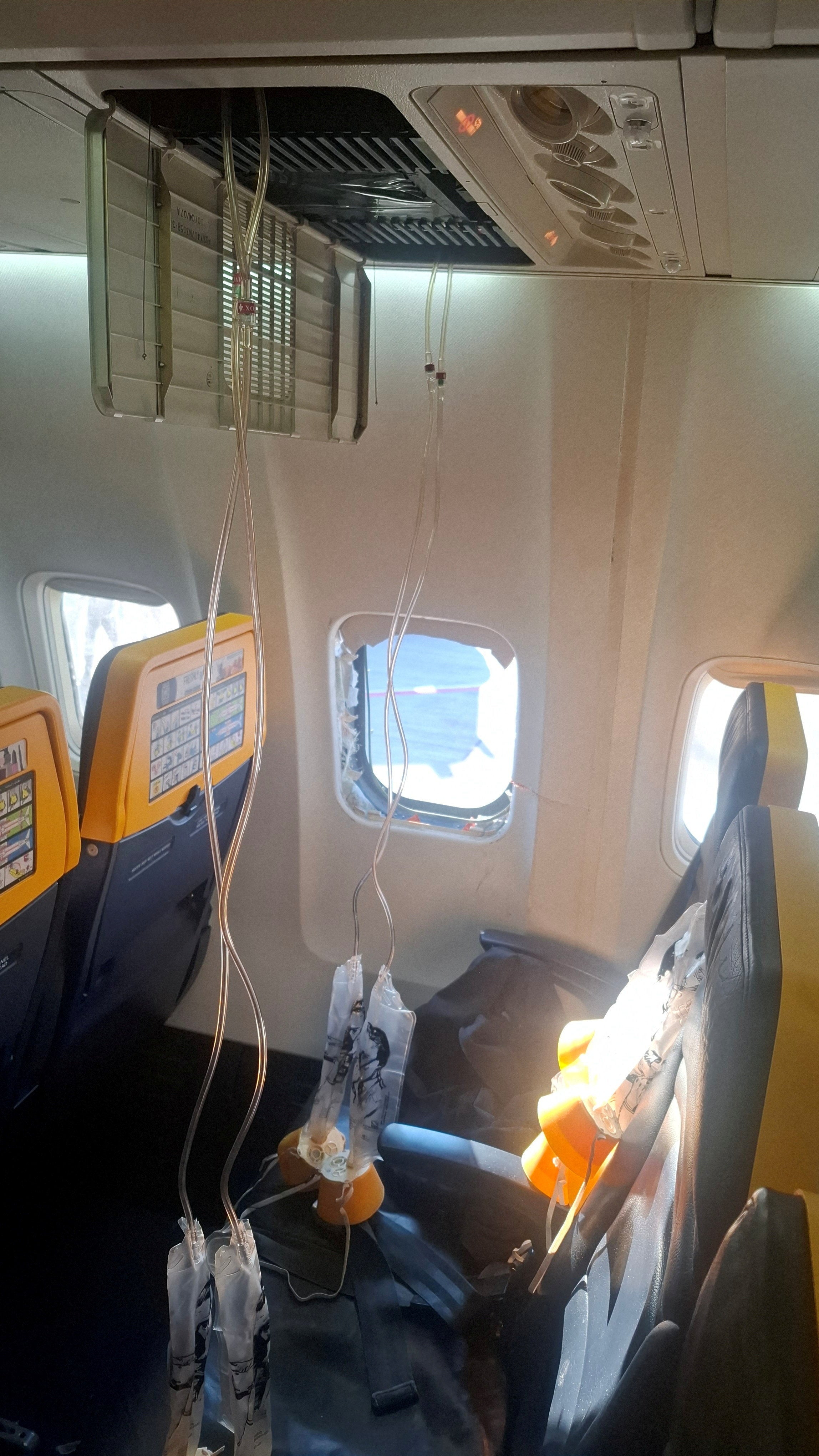
Image: The broken window as seen after the emergency landing on Friday