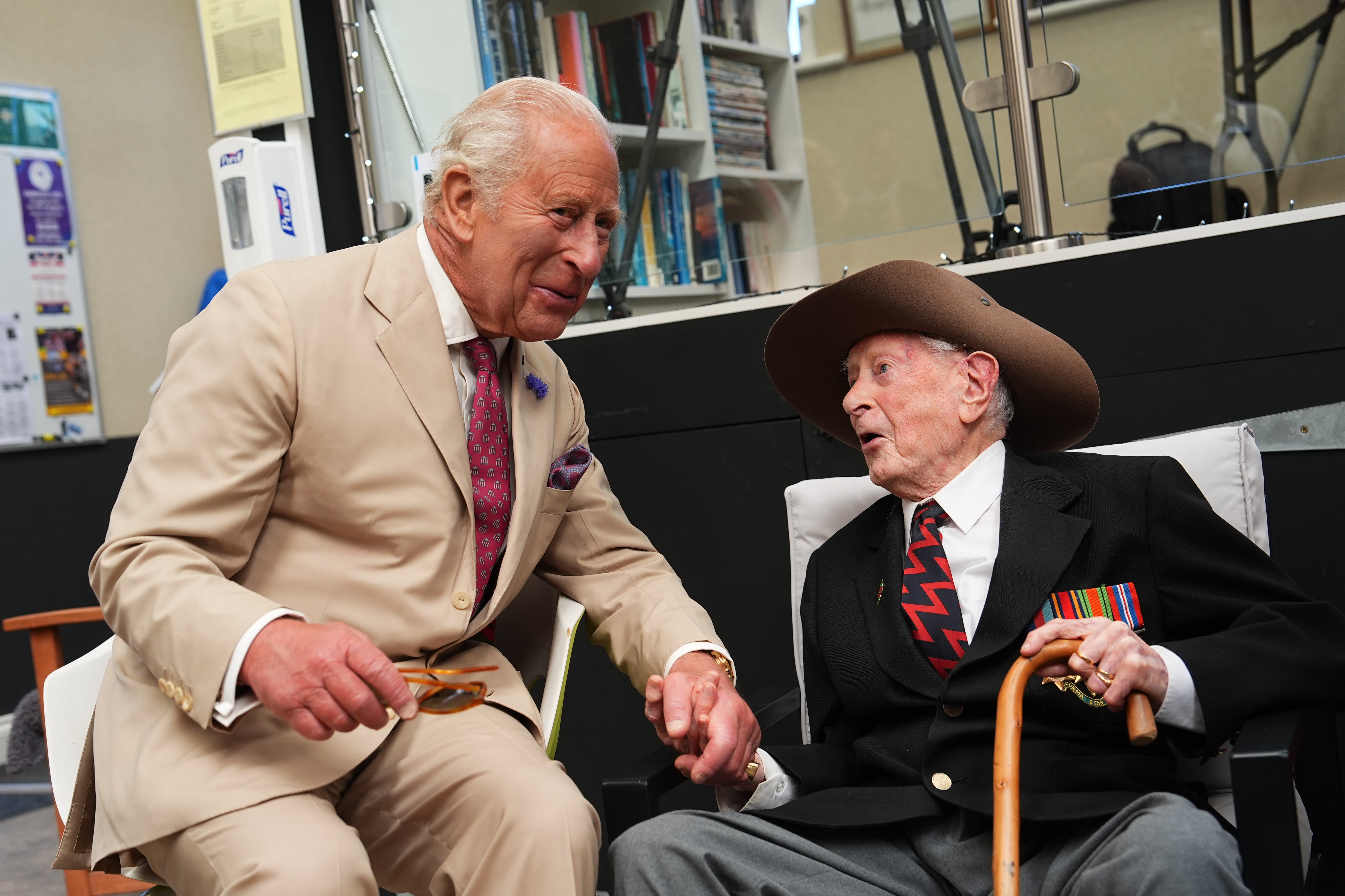
King Charles recently shared a humorous exchange with James Fenton, a 104-year-old veteran of the Burma campaign during World War II. During their encounter, Charles quipped, “It’s terrible because bits keep dropping off,” in reference to the shared experience of aging.
The meeting took place during Charles's visit to the Isle of Man on a Tuesday, where he reunited with Fenton, having first met during the 2025 80th anniversary commemorations of VJ Day in London. Their conversation unfolded at Port Soderick Beach, where the charity Heroes On The Water provides kayaking opportunities for injured military personnel.
Fenton, a recipient of the Burma Star, served as a bombardier with the 178th Field Regiment, Royal Artillery. As Charles held his hand throughout their discussion, Fenton wished the King well. Charles responded with good-natured self-reflection, saying, “I don’t know how you do it – it’s bad enough at my age.”
During this visit, the King, also known as the Lord of Mann, addressed the Isle of Man’s parliament, Tynwald, in the ancient Manx language. He acknowledged the celebration of the Manx Language, humorously hoping he hadn’t “massacred” the occasion.
This marked Charles's first visit to the Isle of Man, a self-governing British Crown Dependency with its own government and taxation system. The island has a rich royal history, which dates back to 1847 when Prince Albert—Charles’s great-great-great-grandfather—was the first royal to visit.
As part of his activities, Charles enjoyed a ride on a horse-drawn tram along Douglas promenade and participated in a garden party, further engaging the local community.
The Burma Campaign
Fenton's service in the Burma campaign involved significant battles during World War II, primarily focusing on Allied forces combating Japanese invasion. By 1944, approximately one million troops from the British Empire were on the ground, culminating in the recapture of the region in 1945.
A Legacy of Valor and Humor
The meeting between King Charles and James Fenton illustrates a poignant juxtaposition of valor and the inevitable realities of aging. Fenton's experience as a veteran embodies a link to a critical chapter in military history. It’s not every day that a monarch meets a centenarian who has firsthand experience of such significant events. This encounter is significant not just for their shared laughter but also for what it represents—a continuity of respect and recognition for those who've served.
Fenton, having served in the Burma campaign, witnessed substantial hardships. The military campaigns there were notorious for their brutal conditions, and those who participated grappled not only with physical challenges but also mental scars that can last a lifetime. Fenton’s light-hearted interaction with the King amid seriously reflective moments underscores the resilience and camaraderie found in veterans' circles.
Royal Engagement and Cultural Heritage
King Charles's engagement during this visit was multifaceted. Beyond his meeting with Fenton, his address to the Isle of Man's parliament highlights a genuine appreciation for local traditions. By speaking in the ancient Manx language, the King acknowledges both the cultural and historical significance of the Isle, a place that cherishes its distinct identity within the British Isles.
This kind of engagement isn’t merely ceremonial; it serves deeper societal and historical connections. The Isle of Man has a unique tradition of self-governance, which has only been sharpened by its long-standing relationship with the British monarchy. A gesture like addressing parliament in Manx, a language with dwindling speakers, can strengthen communal bonds and animate discussions around cultural preservation and identity.
Charles’s light-hearted comment about “massacring” the occasion also serves to humanize the monarchy. That’s the tricky balance royal figures often need to strike—showing they are relatable and approachable while still honoring the length and weight of their roles. This subtle humor can make the monarchy feel less distant and more integrated into the lives of everyday people.
Implications and Significance
This encounter, while seemingly light and humorous, carries deeper significance in a quick-changing socio-political landscape. The relevance of such engagements can’t be overstated. If you’re working in this space—be it media, public relations, or even community organizing—understanding the value of human connection and storytelling through shared experiences is vital. Personal interactions humanize history, propelling it into the public consciousness in ways other methods simply can’t achieve.
As for Fenton, reaching the age of 104 and still engaging with figures of historical significance is inspiring. His stories will likely resonate beyond his own lifetime, framing a narrative of resilience, valor, and humor that future generations can appreciate. And yet, as Charles embarks on this journey as King, moments like these will matter more than just royal appearances; they forge a pathway for enduring legacies of service and community spirit, leading to greater mutual respect across generations.
This scene also serves as a reminder of the enduring connections between the past and present. As veterans age, it becomes crucial for society to acknowledge their contributions, understanding that their stories form a part of our collective memory. In their anecdotes lie lessons not only about sacrifice but also about the evolving nature of community and camaraderie, which ought to spark discussions on how we honor and remember those who serve.