In a significant archaeological find, researchers in Italy have uncovered the royal tomb of a pre-Roman warrior prince, complete with a chariot and various weapons. This burial site, part of a larger sixth-century B.C. necropolis, has piqued interest regarding the funerary customs of the enigmatic Piceni civilization.
The Location and Context of the Discovery
The monumental tomb was located in Sirolo, a quaint town along Italy's Adriatic coast. The announcement of this find came in a July 1 statement from the Superintendency of Archaeology, Fine Arts and Landscape for the Provinces of Ancona, Pesaro, and Urbino. Situated near the ancient Piceni settlements, Sirolo has been a focal point for archaeological research due to its rich historical significance. The Piceni, an Italic group that thrived in this region, coexisted with the more renowned Etruscans. However, the Piceni’s written records are sparse, making archaeological evidence all the more vital for understanding their culture. Thus, each find in this area can reshape how historians perceive the intricacies of pre-Roman societies.
The Intriguing Findings
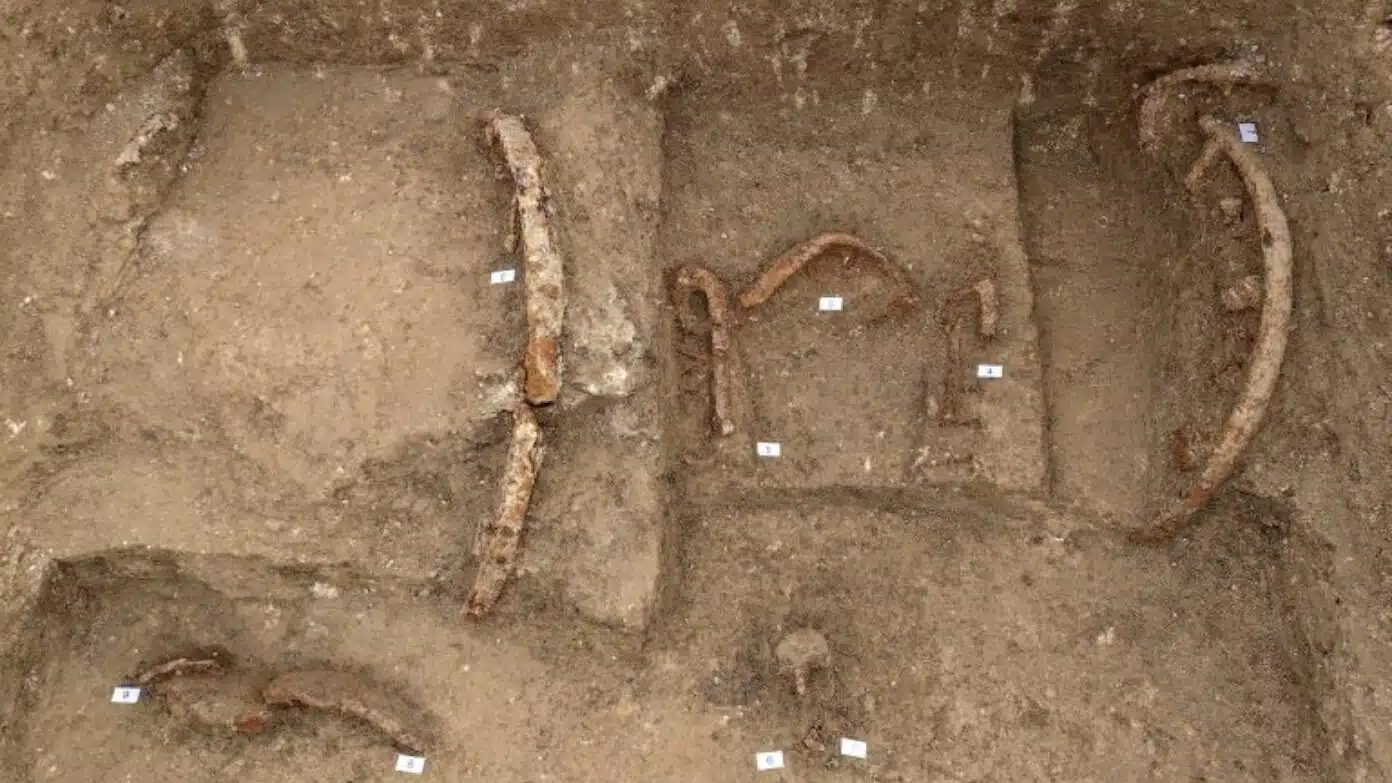
This newly discovered site joins another princely tomb unearthed in the Pini cemetery back in 2020, which also featured a chariot and a cache of armaments. The current tomb stands out due to its elaborate burial arrangement, featuring a burial set within a grand circular palisade. This isn't just about preserving a body; it's a ritualistic framework some 2,500 years old. Here, archaeologists found a large male skeleton alongside a well-preserved two-wheeled chariot, or currus, which indicates the high status of the individual interred. Accompanying the remains were distinctive items, including a helmet that speaks to the warrior's status and an ax, which may have had both functional and symbolic significance in combat or ritual. The bronze vessels sealed with ceramic lids could hold remnants from ritual feasts or libations offered to the deceased, hinting at complex funerary customs.
A Parallel Burial Discovery
Alongside the warrior, a female burial was discovered, featuring clothing remnants, shoes, and numerous fibulae—ancient pins that likely secured her garments. This is where things get particularly interesting: a significant fibula embellished with amber was positioned near her head, which might indicate status or personal adornment, providing insight into the fashion and societal norms of the time. This female tomb lies near the famed "Queen's Tomb" discovered in the 1980s. This previous find contained lavish items, including multiple chariots, which suggests that the burial rites of the elite in the Piceni culture involved a complex interplay of gender roles and status.
Insights from the Excavation
This charnel house's unique circular arrangement surprised archaeologists familiar with older Piceni burial sites, which typically feature ditches as boundary lines to separate the living from the dead. The design here is markedly different: a distinctive wooden palisade set upon a slight elevation, which likely enhances its symbolic and social stature. It's a striking reminder that the Piceni civilization was not just a regional player but had an organized social structure capable of elaborate architectural schemes. Stefano Finocchi, director of the excavation, offered his perspective on the unprecedented nature of this aristocratic complex, shedding light on the elite social hierarchies and public displays of authority that characterized the society.
While many artifacts are still under analysis, early findings suggest these burial practices highlight a complex network linking Piceni rulers with broader interactions across central Italy. The emerging narrative isn't just about local practices; it reflects a dynamic society engaged in exchanges with neighboring cultures, indicating a more interconnected regional history than previously understood. If you're working in this space, these insights could provide vital clarity on the socio-political connections of ancient Italic communities.
Implications and Future Outlook
The implications of this discovery extend beyond mere fascination. It challenges existing theories about the Piceni and their interactions with surrounding cultures. As more artifacts undergo analysis, we may uncover additional layers of meaning pertaining to trade, ritual practices, and social structures. The significance of the tombs, especially the warrior's, suggests a need for a re-evaluation of how we understand the Piceni in relation to their contemporaries. Will this change how we view other archaeological sites in Campania and the Adriatic? Perhaps. Each new find adds to our understanding, but it also raises questions about what remains undiscovered. Will this compel further explorations? Only time will tell.