Recent discoveries about the Milky Way's spiral arms may necessitate a reevaluation of its overall size and mass. Scientists have determined that two of these gigantic arms are positioned much farther from Earth than earlier estimates suggested, potentially altering key aspects of our galaxy's structure.
As a barred spiral galaxy, the Milky Way comprises a dense core featuring a supermassive black hole known as Sagittarius A*, flanked by four significant arms: the Sagittarius arm, Scutum-Centaurus arm, Perseus arm, and Outer arm. These arms extend outward in a shape resembling a colossal pinwheel, containing most of the galaxy’s stars and gas. In contrast, other stars, such as our own sun, are situated in the spaces between these limbs or in smaller, unnamed structures.
The traditional method for estimating the dimensions of these arms relied heavily on the Milky Way's rotation rate. Given our vantage point inside the galaxy, direct observations of its entirety remain impossible. This reliance has led researchers to project the galaxy's diameter at about 100,000 light-years and its mass at roughly 1.5 trillion solar masses, as indicated by several astronomical studies.
However, this measuring approach isn't infallible, casting uncertainty over the Milky Way's characteristics—uncertainties that have persisted since its spiral shape was first identified approximately 175 years ago. Beatrice Vaia, a researcher at the Italian National Institute for Astrophysics and the lead author of a recent study, pointed out that the methodology used leaves considerable room for error, especially as one moves further away from the galaxy's center.
Published on June 19 in the journal Astronomy and Astrophysics, the new study introduces an innovative approach to measuring the galaxy's arms. The research team utilized gamma-ray bursts (GRBs)—the universe’s most powerful explosions—as a cosmic measuring stick. As X-ray light from these bursts passes through dense gas clouds within the Milky Way, it creates luminous rings that can provide data on their distance from Earth.
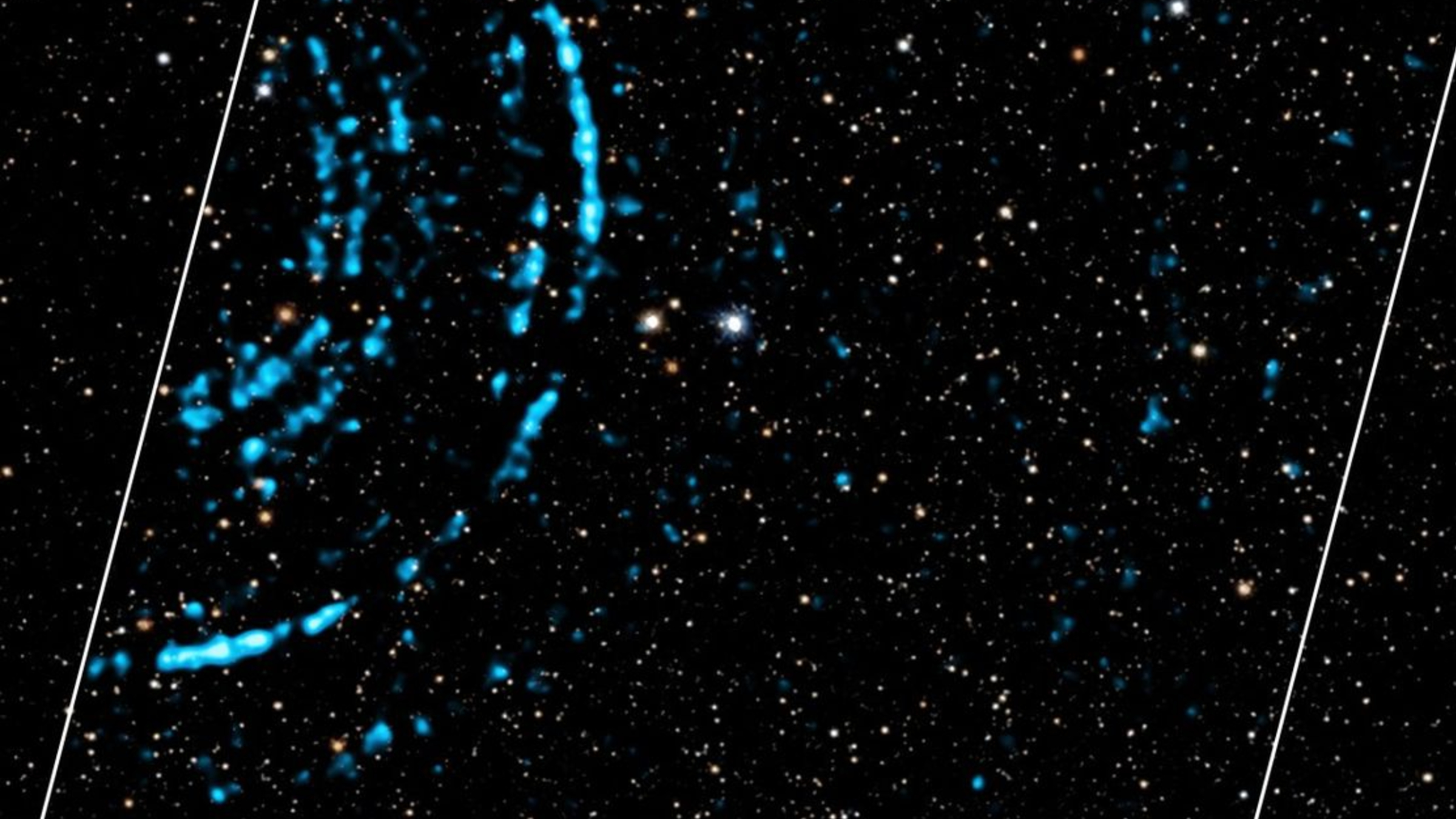
Employing data from NASA's Chandra X-ray Observatory and the European Space Agency's XMM-Newton observatory, the researchers analyzed the echoes from three distinct GRBs that illuminated gas clouds located within the Perseus, Outer, and Scutum-Centaurus arms. The findings suggest that both the Outer and Scutum-Centaurus arms are likely situated about 10% farther from our planet than previously believed, translating to thousands of additional light-years. While this may appear marginal, it carries significant implications.
The primary takeaway from this research is the potential enlargement of the Milky Way—implying not just a greater size but also likely an increase in its mass. Ilaria Fornasiero, an astronomer at the University of Bologna and co-author of the study, emphasized how even minor alterations in distance measurements can profoundly influence our understanding of the galaxy's architecture. A more extensive Milky Way means astronomers may need to recalibrate their mass estimates, informing theories about the galaxy's formation and structure.
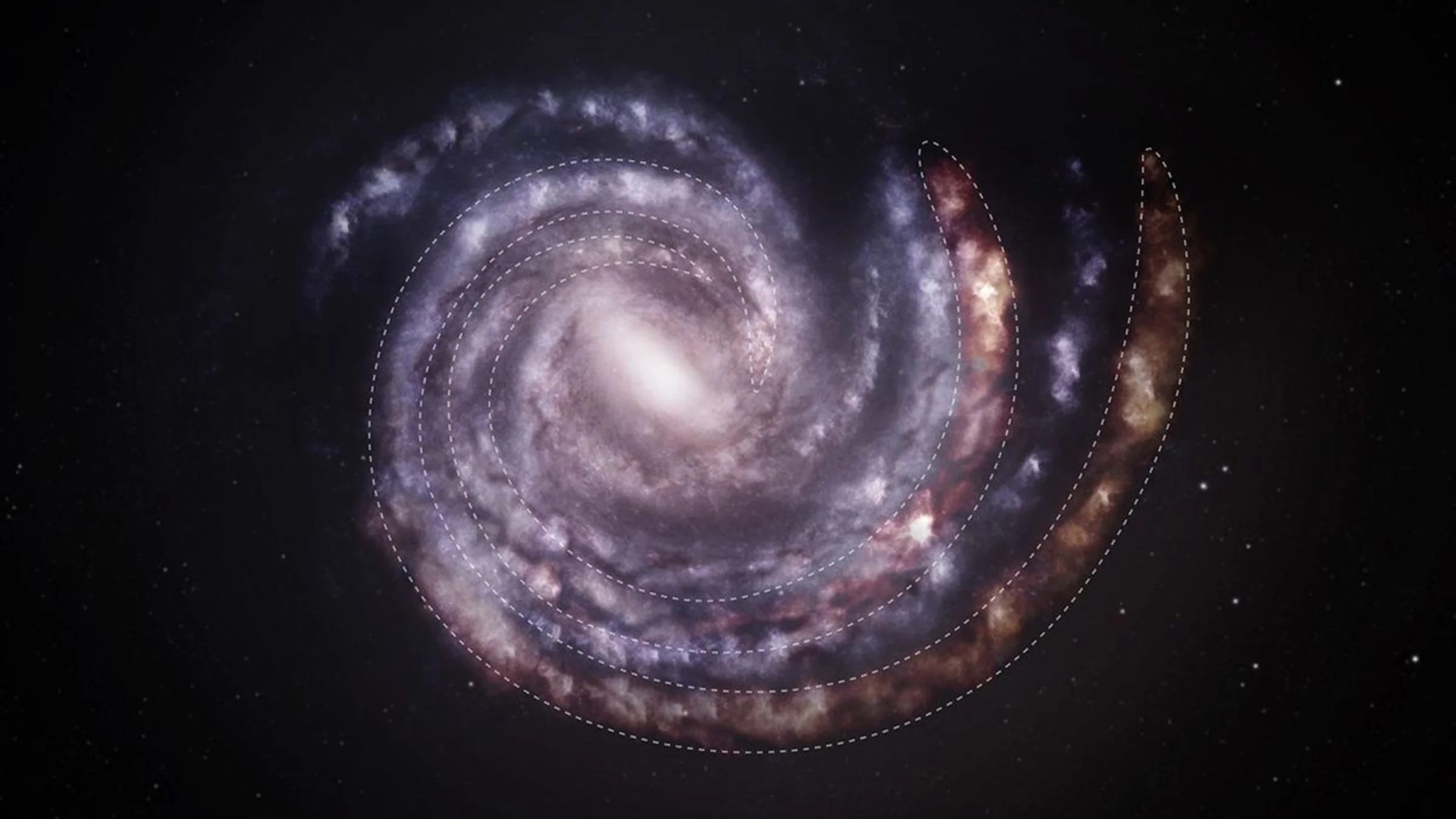
Visual representations accompanying this new research illustrate a Milky Way that resembles a lopsided snail shell compared to the traditional symmetric spirals. These animations show the Outer and Scutum-Centaurus arms extending much farther into intergalactic space than previously depicted. Nevertheless, it's crucial to remember that this portrayal doesn't definitively depict the true structure of the galaxy, as other arms haven’t undergone the same rigorous measurement.
Looking ahead, researchers continue to seek additional GRBs that can provide crucial data for mapping the galaxy’s underserved regions. Yet, this task is challenging; Andrea Tiengo, an astronomer at Scuola Universitaria Superiore Pavia, noted that despite two decades of searching, only a handful of such bursts have been located. This ongoing quest aims to unravel the Milky Way's remaining mysteries and offer clearer insights into its makeup and that of our cosmic surroundings.